Vancouver Rental Scam: I Moved In, Then Another Tenant Showed Up
When looking for a rental, the basic rule is to see the property in person whenever possible, verify who you are dealing with, and only send money after confirming the details.
Many people already know this.
But there have been rental scam cases where the victim viewed the property in person, met the person renting it out, signed a lease, and still got scammed.
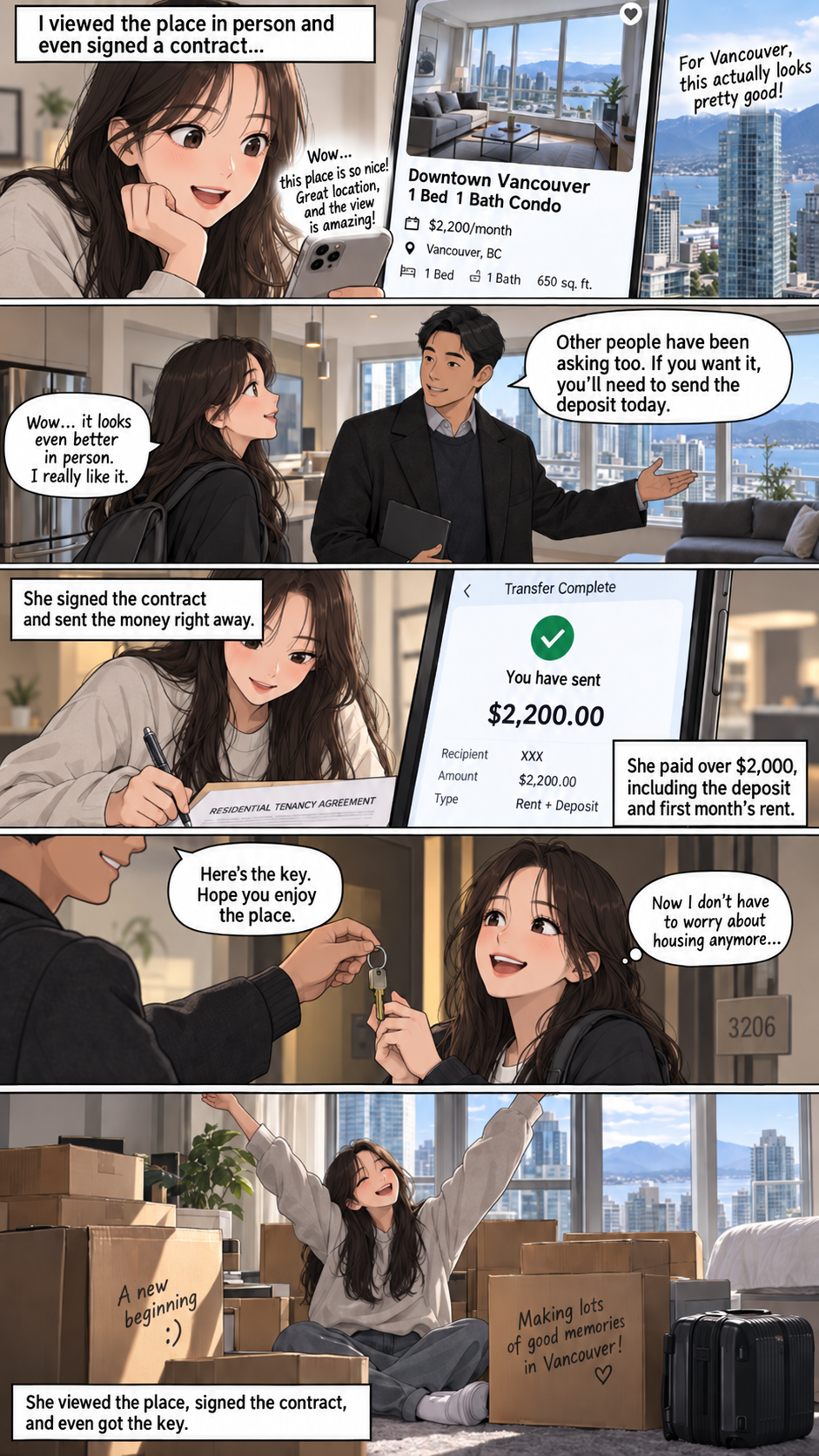
The victim found a rental listing online that looked like a good fit.
They met the person advertising the unit, viewed the property in person, and did not notice anything unusual.
While discussing the rental, the person said:
“Other people are interested too. If you want the place, you’ll need to send the deposit today.”
Because the victim had already seen the unit in person and had a written lease, there did not seem to be much reason to be suspicious.
They paid more than $2,000, including the deposit and rent, and were even given a key.
A few days later, they moved in as planned.
They thought the stressful part of finding a home was finally over.
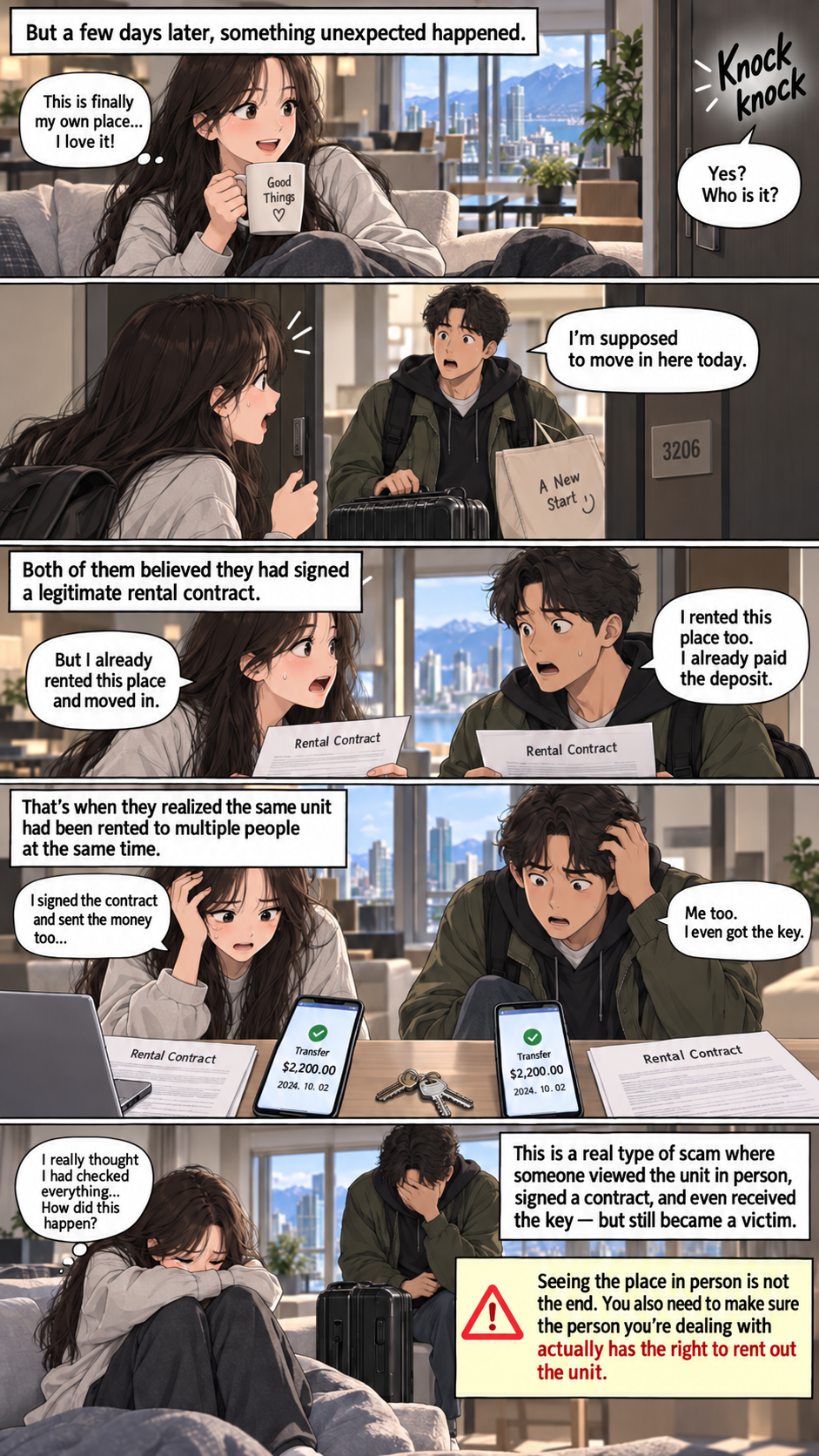
Then, not long after moving in, someone knocked on the door.
When the victim opened it, a stranger was standing there with luggage and moving boxes.
“Who are you?”
The other person looked just as confused.
“I’m supposed to move in here today.”
At first, the victim thought the person had the wrong address.
But the address they showed was exactly the same.
“I already rented this place. I’m living here.”
“I rented it too. I already paid the deposit.”
The two started comparing their rental agreements.
That was when they realized what had happened.
The same rental unit had been rented to multiple people, and each of them believed they had signed a legitimate lease.
The victim had viewed the property, signed an agreement, transferred the money, and even received a key.
But one important thing had not been confirmed.
Did the person showing the property actually have the legal right to rent it out?
Seeing the Property in Person Is Not Enough
When people think of rental scams, they often imagine fake listings using photos of properties that do not exist, with scammers asking for a deposit before allowing a viewing.
But rental scams can be much more sophisticated.
Someone who already has access to a property may be able to show you the unit in person, prepare a lease, and even hand you a key.
That is why, after confirming that the property itself is real, the next thing to verify is the person you are signing the agreement with.
You should confirm whether the person is the actual landlord, or whether they are a property manager, agent, or another person who has been authorized to rent out the property.
For example, if someone says,
“I’m the landlord,”
do not rely only on that statement.
Check whether the name on the lease matches the person you are dealing with.
If an existing tenant is renting out a room or unit, it is also worth asking:
“Does the landlord know that I’m moving in?”
That extra question can make a big difference.
Search the Address One More Time
Before signing a lease, it can also help to search the property address online.
If the same unit appears on another platform with a different price or different contact information, do not immediately send money. Find out why the listings are different.
You can also reverse image search the photos used in the listing.
Some rental scams use photos taken from legitimate real estate sales listings or other rental advertisements.
You should also be cautious if someone keeps pressuring you with messages such as:
“If you don’t send the money today, I’ll give the unit to someone else.”
or
“You need to send the deposit first if you want me to hold the place.”
In a competitive rental market like Vancouver, these statements can sound completely realistic.
But that sense of urgency is also something scammers can use against renters.
A Lease and a Key Do Not Guarantee That Everything Is Legitimate
Having a signed lease and receiving a key does not automatically mean the person you are dealing with is the actual landlord.
Ultimately, the question you need to answer is not only:
“Does this property actually exist?”
You also need to confirm:
“Does the person I am dealing with actually have the right to rent this property to me?”
Finding a good rental before someone else takes it can feel urgent.
But before sending money, confirming who you are dealing with should always come first.
If you are looking for a rental in Canada or are unsure about something during the rental process, feel free to contact Hellomark.
We can help you go through the details that are easy to miss when renting in an unfamiliar market.

